★4.9 Google rated 🎵
100+ reviews from our local Gahanna families 🎵
Serving the Gahanna community since 2010 🎵
Unlimited makeups* 🎵
Change your schedule at any time 🎵
Simple, transparent pricing 🎵
Family discounts 🎵
Neurodiversity-affirming music lessons 🎵
Two-teacher model: Music Lab + instrument 🎵
Unlimited adult Music Lab time 🎵
Year-round performance opportunities 🎵
Annual benefit concert for local food pantry 🎵
Conveniently located near Hamilton & Morse 🎵
Book a 4-week trial today!
Electronic Dance Music, often called EDM, has become one of the most recognizable sounds in modern music. Today it fills stadiums, festivals, and dance clubs around the world. However, the roots of EDM go back much further than many people realize.
The story begins in the early 20th century with an unusual invention called the teleharmonium. This early electronic instrument worked somewhat like a giant organ. Instead of pipes, it used rotating tone wheels to generate electrical signals that produced musical tones. Although the instrument was massive and difficult to maintain, it showed musicians that electricity could create entirely new sounds.
As technology improved, electronic instruments became smaller and more practical. Synthesizers eventually allowed musicians to shape and manipulate sound in ways traditional instruments could not. Because of this, composers began experimenting with electronic tones, rhythms, and effects.
The Rise of Electronic Dance Music
Meanwhile, the late 1970s brought a major shift in dance music. When disco music declined, DJs and producers began searching for new sounds that would keep people dancing. As a result, house music and other electronic genres emerged in clubs during the 1980s. These styles relied heavily on drum machines, synthesizers, and repeating rhythms designed specifically for the dance floor.
Soon, new techniques became popular as well. Producers began sampling, which means taking small pieces of recorded sound and reusing them in new songs. Artists also experimented with synthesized voices and electronic instrument sounds, creating music that felt futuristic and energetic.
A Worldwide Phenomenon
Over time, many new genres developed from these early electronic styles. Techno, trance, dubstep, and many other subgenres all grew from the same electronic foundations. Because of this creativity and constant evolution, EDM eventually spread across the globe.
Today, Electronic Dance Music is truly a worldwide phenomenon. Massive festivals, international DJs, and innovative technology continue to shape the genre. Yet at its core, EDM still follows the same goal it always has: using electronic sound to create music that makes people want to move.
🎼🎼 What Our Students Discovered: Classical Era Music
Last month in the MTMS Music Lab, students explored the elegance and structure of Classical Era music (approximately 1750–1820). Through listening and history stations, they shared thoughtful observations about composers, instruments, and musical style. As a result, we saw some wonderful musical thinking in action.
🎧 First Impressions from the Listening Station
To begin, many students noticed the distinctive sound of Classical music.
Students frequently mentioned hearing piano, organ-like sounds, and full orchestras. For example, Nubung R. observed the presence of “orchestras with different instruments.” Similarly, Ethan L. noted that composers “used a lot of the same instruments.”
In addition, tempo changes stood out. Nubung R. shared that “tempos can vary in a single piece.” Likewise, Ethan L. noticed the music was often “slow to fast and then slow again.” Most notably, Noah G. summed up the expressive range beautifully, saying “every emotion can be expressed in classical music.”
Students also commented on the overall mood. For instance, Beatrice V. said it “gives a tense feeling.” Meanwhile, Haley N. noted it has “no words” and “makes you tired like a lullaby.” Sebastian V. added that the pieces “sound old” and resemble “an organ playing.”
Finally, Freya W. made an insightful structural observation: “Melody for Twinkle Twinkle is 13 minutes because classical music liked to go long because you can do more with instruments than voices.”
🎹 Recognizing Famous Works
Next, students made strong connections to well-known repertoire.
Hayden C. shared that the music felt “familiar and enjoyable.” He also named Turkish March as a personal favorite. In the same way, Owen C. recognized that many selections were by Beethoven. He further noted that a Mozart piece appears in his own lesson book.
Meanwhile, Callan G. identified Für Elise as a piano piece. He also noticed the beginning of Beethoven’s Fifth Symphony “sounds like it’s played on drums.” In addition, Kristofer S. connected Mozart’s Ah, vous dirais-je, Maman to “a minute version of Twinkle Twinkle Little Star.”
🕰️ What Students Learned About the Era
From the history station, students demonstrated growing understanding of the time period.
To start, Lila P. noted the music was popular in the 1750s–1820s. She also described it as “more serious music.” Deven D. shared key composer facts. He wrote, “Beethoven lost hearing” and “Mozart’s dad taught him music.”
Furthermore, Sebastian V. explained that many composers “started music at a young age.” He also mentioned the historical use of an ear trumpet before hearing aids.
Ekam J. offered a particularly nuanced distinction:
“Classical with an uppercase ‘C’ refers to the traditional music in the period of 1750–1820, whereas classical with a lowercase ‘c’ refers to what is used in things like film scores and western music.”
He also noted that Mozart began composing at age five. Additionally, he shared that Beethoven’s musical path was strongly influenced by his father’s expectations.
🎼 Musical Patterns Students Noticed
Overall, students consistently identified hallmark traits of the Classical style.
For example, Mila J. observed that there are “2 different types of classical.” She explained that sometimes the music is piano-only. However, other times it features multiple instruments, often still including piano.
Similarly, Liam C. noted that Classical music “consists mainly of piano and string instruments.” He also pointed out that “drums can be very intense.” In addition, he noticed the repertoire includes “lots of operatic pieces.”
💜 MTMS Reflection
We love seeing how carefully our students listen. Even more importantly, we love how thoughtfully they share their ideas. From recognizing famous themes to noticing tempo changes, these reflections show real musical growth.
As always, the Wheel of Themes will spin again soon… and we can’t wait to hear what our students discover next! 🎡✨
🎶 2026 Winter Benefit Concert: An Afternoon of Music, Courage, and Community
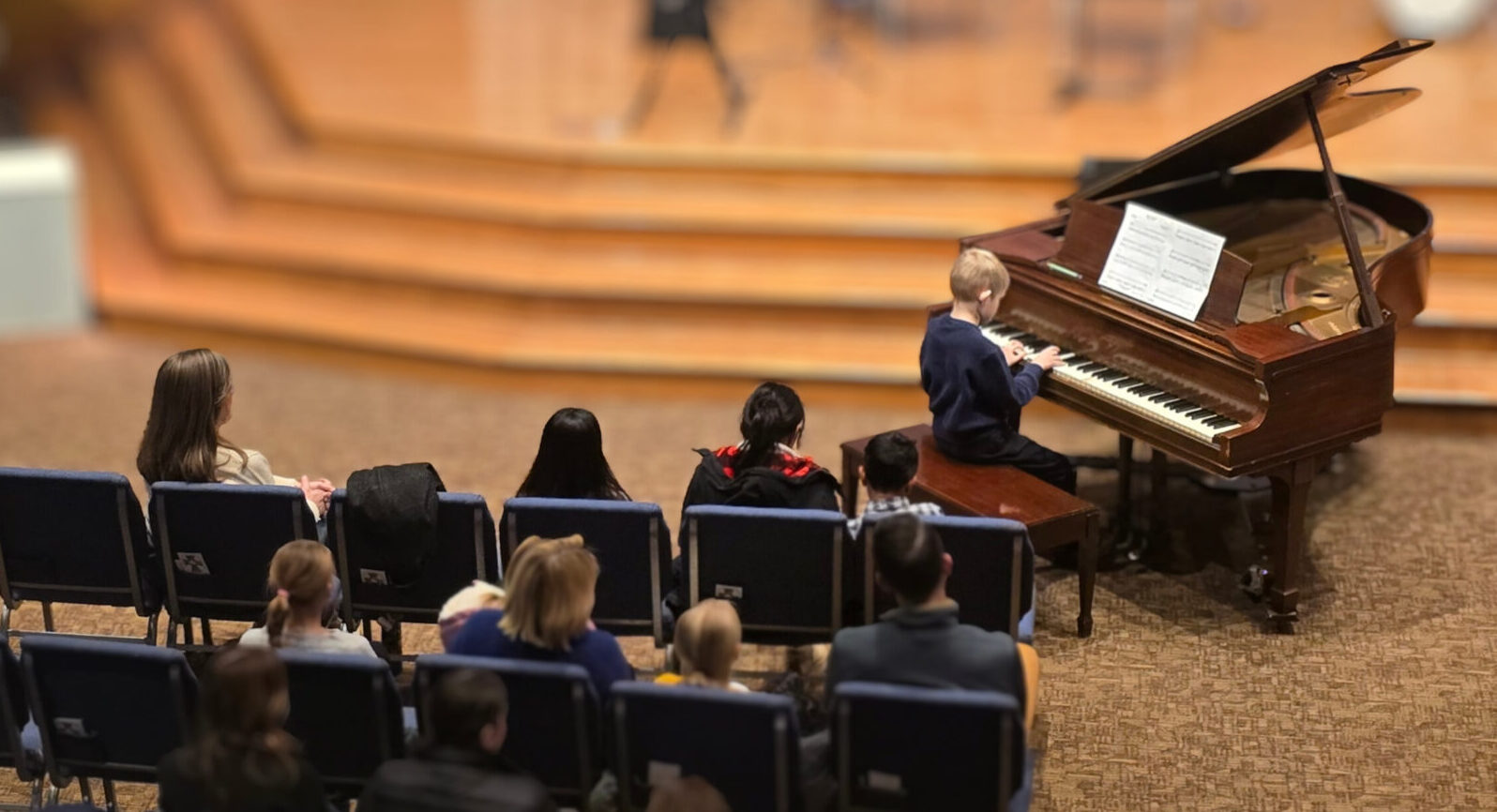
On Saturday, January 24, our Michelle Tuesday Music School families filled the hall at St. Luke Lutheran Church with something bigger than music. Together, we gathered to support Gahanna Residents in Need, and by the end of the afternoon our community had donated a record-breaking 221.1 pounds of food.
And what an incredible gift it was.
Beating the Storm
We were also fortunate with timing. The final applause barely faded before the winter storm strengthened outside, and it reminded us how powerful it is when a community comes together to take care of one another.
Two sessions, at 3:00 and 4:00 PM, gave dozens of students the chance to share what they’ve been working on. Yes, we had a small delay at the start thanks to some slideshow hiccups. But if anything, it created even more time for deep breaths, last-minute tuning, and the quiet encouragement that makes MTMS feel like family.
Backstage and in the audience, pep talks were everywhere. Teachers knelt beside benches. Parents squeezed hands. Friends whispered, “You’ve got this.”
And then the music began.
Building Confidence
One moment captured the spirit of the day perfectly. A student felt the nerves hit right when their turn approached. Instead of giving up, they waited, regrouped, and bravely returned later in the session. When they played, they did beautifully. And the applause that followed wasn’t just for the notes — it was for resilience, growth, and the courage to try again.
That is why we perform.
An Afternoon to Remember
Our performers represented the rosters of Teachers Kristen, Sarah, Leann, Michelle, Steve, and Walt, each teacher cheering on their students with unmistakable pride. Meanwhile, Kira and Tiffany kept the concert running smoothly in the sound booth, with Teacher Walt jumping in to help whenever needed. And Kitt was in the balcony, shooting photos to commemorate the event.
From classical favorites to holiday tunes, from heartfelt solos to family collaborations, every piece added something special to the afternoon.
Thank you to the students, families, staff and volunteers who participated in this concert event. We love our community and making it stronger together.
Because of our students’ hard work and our families’ generosity, neighbors in need will have fuller shelves this winter.
We are so proud of the bravery on that stage, the kindness in those donations, and the community that makes both possible.
Thank you for being part of it! ❤️🎶
Enjoy a handful of photos from the event below. Click or tap on each thumbnail to see the full image. Parents, contact the receptionist or media@michelletuesday.com to request the full set of photos for your child’s performance.
🎵 Concert Program
Trombone – Mozart Melody
Percussion – Solo #1 for snare and bass drum
Piano – Jingle Bells
Piano – Paper Airplane
Piano – A Minuet for Mr. Bach’s Children
Piano – Auld Lang Syne
Piano – Beneath the Winter Moon
Piano – Crescent Moon
Piano – Test Drive from How to Train Your Dragon
Piano – Auld Lang Syne
Piano – O Holy Night
Piano – Prelude in C – Bach
Piano – Burgmüller Ballade
Guitar – Bourrée
Cello – Rolling Along
Violin – A Christmas Duet (with teacher accompaniment)
Violin – Can’t Help Falling in Love
Violin – Jingle Bell Rock
Voice – Caro mio ben
Violin – Song for Christine
Guitar – Scarborough Fair
Piano – I Just Can’t Wait to Be King
Piano – I Have a Little Dreidel
Piano – Carol of the Bells
Piano – I Saw Three Ships
Piano – Evergreen
Piano – Forest Song
Piano – Halo Theme
Piano – Saint Nick Boogie
Piano – Rockin’ Around the Christmas Tree
Piano – Rock Those Halls
Piano – Winter Wind
Piano – Song of India
Piano – Alone on Christmas Eve
Violin – Simple Gifts (duet with teacher)
Glockenspiel – Linus & Lucy (duet with Michelle Tuesday, piano)
Guitar – Canzone
Percussion: Snare Drum – The Liberty Bell
Voice, Guitar & Bass Guitar – The First Noel (sisters performing together)
Reggae music is instantly recognizable by its relaxed groove, steady bass lines, and off-beat rhythm. Yet behind that signature sound lies a rich cultural and musical journey that stretches across decades of Jamaican history. Reggae did not appear overnight. Instead, it grew gradually from earlier styles, each one shaping what would become a global movement.
Early Roots: Jamaica’s Folk Traditions and Mento
To begin with, the foundations of reggae can be traced back to Jamaica’s folk music traditions. In the 1940s and 1950s, a style known as mento was widely popular. Mento blended African rhythmic influences with European instruments and song structures. Acoustic guitars, banjos, hand drums, and the rumba box created a lively yet grounded sound.
Just as importantly, mento lyrics often told stories of everyday life. Humor, social observation, and local culture were woven into the music. This focus on storytelling and commentary would later become a defining trait of reggae itself.
The Rise of Ska: Fast, Bright, and Full of Energy
As Jamaica’s cities grew and outside musical influences increased, mento began to evolve. American rhythm and blues and jazz made their way to the island through radio broadcasts and imported records. As a result, musicians blended these styles with traditional Jamaican rhythms, giving birth to ska in the late 1950s and early 1960s.
Ska was fast-paced and joyful. Horn sections drove the melody, while the rhythm guitar emphasized off-beats that made the music easy to dance to. At the same time, Jamaica was approaching independence, and ska became the sound of celebration, hope, and cultural pride.
A Change in Feel: The Rocksteady Era
However, as time went on, musicians began to slow things down. By the mid-1960s, ska gradually transitioned into rocksteady. The tempo became more relaxed, and more musical focus was placed on bass lines and vocal harmonies rather than on horn sections.
Because of this shift, lyrics took on a more emotional and reflective tone. Songs explored love, struggle, and real-life experiences with greater depth. This slower, heavier groove created the perfect bridge between ska and the next major evolution of Jamaican music.
The Birth of Reggae
By the late 1960s, reggae had fully emerged as its own genre. While it grew directly from rocksteady, reggae introduced a deeper rhythmic emphasis on the bass and drums. The off-beat guitar and keyboard patterns became more pronounced, and the overall feel became rooted, steady, and intentional.
At the same time, reggae began to reflect broader cultural and spiritual ideas. Many songs expressed themes of unity, injustice, faith, and resilience. Because reggae grew out of working-class communities, it became a powerful way for people to express both hardship and hope.
Bob Marley and the Global Breakthrough
As reggae developed in Jamaica, one artist played a major role in bringing it to the world: Bob Marley. As the frontman of The Wailers, Marley helped introduce international audiences to reggae in the 1970s. Through touring and recording, his music carried the sound of Jamaica far beyond the island.
More importantly, Bob Marley’s songs shared messages of peace, resistance, faith, and human connection. His music introduced many listeners to the spiritual and cultural ideas tied to reggae, including themes connected to the Rastafari movement. Even after his passing in 1981, his influence continued to grow, and today he remains one of the most recognized and respected figures in music history.
Because of artists like Marley, reggae became far more than a regional style — it became a worldwide voice.
Reggae’s Ongoing Influence
As reggae spread across the globe, it continued to evolve. Over time, it influenced new styles such as dub and dancehall while also merging with pop, rock, and hip-hop. Meanwhile, reggae rhythms began appearing in music from Africa, Europe, and the Americas.
In addition, reggae’s cultural impact extended beyond sound alone. The genre became closely associated with expressions of identity, social awareness, and spiritual reflection. Its influence can now be heard not only in Jamaican music but throughout global popular culture.
Listening Through the History
The playlist connected to this post offers a guided listening experience through these important stages of reggae’s development. As students and families explore the tracks, they can hear how the rhythm, tempo, vocals, and emotional depth of the music change from one era to the next. In this way, the history of reggae becomes something you don’t just read about — you experience it through sound.
A Living Musical Legacy
In the end, reggae’s journey is one of steady growth, powerful expression, and worldwide connection. From folk beginnings to global stages, reggae continues to remind listeners that music can be both deeply personal and universally shared. Its story is still unfolding — carried forward by new generations of musicians and listeners around the world.
The 2010s reshaped pop music in unforgettable ways. Streaming and social media changed how songs reached listeners everywhere. For many of today’s students, this decade’s music defined their childhood and their playlists. Let’s look back at a few of the artists — and one viral hit — that made the 2010s pop scene so memorable.
🌟 Taylor Swift: From Country Darling to Pop Powerhouse
Taylor Swift began the decade as a country star known for her storytelling. Songs like Love Story and You Belong With Me made her a household name. In 2014, she released 1989 and stepped fully into the world of pop.
With hits like Shake It Off and Blank Space, Swift showed she could reinvent her sound while keeping her heart in her lyrics. By the end of the decade, she had become one of the world’s most influential artists. Her career reminds young musicians that growth and change are part of every creative journey.
🎸 Ed Sheeran: The Singer-Songwriter Who Brought Heart Back to Pop
Across the ocean, Ed Sheeran was writing songs that would fill stadiums. His music was simple, honest, and full of emotion. Using only a guitar and a loop pedal, he built entire soundscapes on stage.
Sheeran’s hits like Thinking Out Loud, Shape of You, and Perfect blended pop, folk, and R&B. His rise proved that heartfelt songwriting still has a place in pop music. At MTMS, we love showing students how much can be done with one instrument and a little creativity.
Sheeran’s hits like Thinking Out Loud, Shape of You, and Perfect blended pop, folk and R&B. His rise proved that heartfelt songwriting still has a place in pop music. At MTMS, we love showing students how much can be done with one instrument and a little creativity.
🎤 Justin Bieber: From YouTube Discovery to Global Superstar
Justin Bieber’s story began online. A young teenager uploading cover songs soon became a global sensation with Baby. The fame was fast and overwhelming.
Over the years, Bieber’s music matured. His 2015 album Purpose featured songs like Sorry and Love Yourself, blending dance beats with emotional lyrics. His journey from child star to adult artist shows that musicians grow alongside their music — learning, stumbling, and evolving along the way.
🖥️ Rebecca Black and the Viral Sensation “Friday”
Then came a song the internet will never forget: Friday by Rebecca Black. Released in 2011, it became one of the first viral music sensations. Millions watched, shared, and laughed — for all kinds of reasons.
Rebecca Black faced harsh criticism, but she turned that moment into something powerful. She built a career on her own terms and released new music that reflected who she really was. Her story shows young artists that even when things go wrong, perseverance and self-belief can turn it all around.
The 2010s transformed how we experience music. Artists used YouTube, Twitter, and streaming platforms to connect directly with fans. Pop music became more personal and more global than ever before.
Taylor Swift wrote her heart. Ed Sheeran shared his soul. Justin Bieber found his voice. Rebecca Black found her courage. Their stories remind us that music is always evolving — and that every artist, no matter how they start, can find their place in the melody.