★4.9 Google rated 🎵
100+ reviews from our local Gahanna families 🎵
Serving the Gahanna community since 2010 🎵
Unlimited makeups* 🎵
Change your schedule at any time 🎵
Simple, transparent pricing 🎵
Family discounts 🎵
Neurodiversity-affirming music lessons 🎵
Two-teacher model: Music Lab + instrument 🎵
Unlimited adult Music Lab time 🎵
Year-round performance opportunities 🎵
Annual benefit concert for local food pantry 🎵
Conveniently located near Hamilton & Morse 🎵
Book a 4-week trial today!
JAM is Jazz Appreciation Month, and in 2021 they’re highlighting women’s contributions to Jazz. Nina Simone is always a great start, and there are several great events to learn more about women in jazz.
For April, try listening to a little more jazz. Allow yourself to appreciate what the rhythm can teach us, the call and response patterns, and the people who have made it what it is.
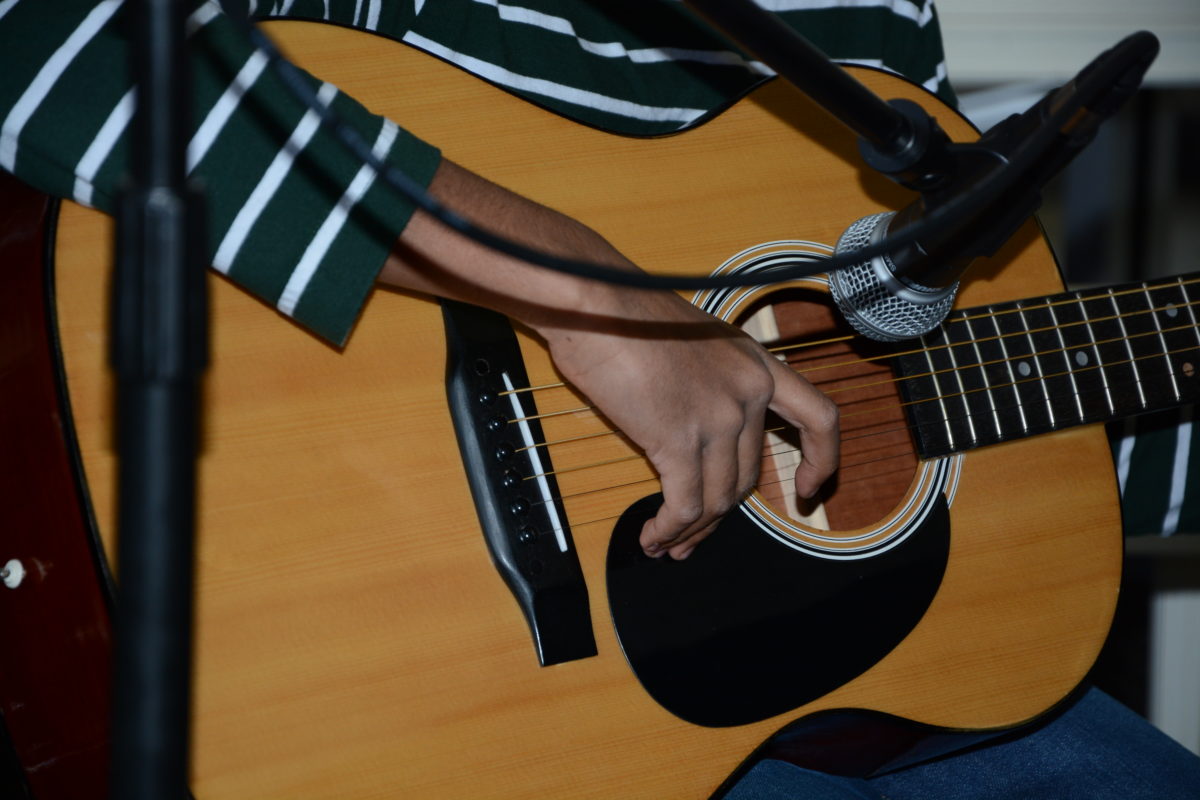
This month’s lab theme is the history of guitar. Today’s modern flat-top acoustic guitars have had a similar design for a couple centuries, but similar instruments – the European lute and the Arabic oud- can be traced back to ancient times. The word guitar comes from the Greek word kithara, which mythology attributes to the god Hermes creating from a tortoise shell.
The guitar became closer to what we see today in the 1790s for design. Steel strings and the flat top design, along with a specific number of strings (6) and frets along the neck, has become the modern instrument we recognize. All of these details, along with the shape of the body and neck, have defined the music that is created on the guitar and how we play it. Even adding a pick and a pick guard have changed the sound that we get from the guitar. Learn more in the music history station in the lab!
April’s Music Composition theme is the Blues – April showers bring May flowers! Bring your bit of the blues to life in the composition station. Here are a couple songs to get you in the mood:
There are also a few advanced challenges – have fun and don’t be afraid to put your own spin on it.
In this video, Charlie Puth is breaking down how he wrote his hit song, “Attention”. I have always been a HUGE fan of Charlie Puth and his music. I came across this video the other day and was really intrigued by his song writing process. Being classically trained, I am constantly looking at the sheet music and putting all my focus in that. Even when I wrote compositions during music school, it would be on sheet music. Charlie thinks outside of the box. He puts all of his music on his phone in his voice notes app when he has a song idea. What was interesting about this video is how he goes through his song writing process, by playing, mixing and layering different parts together into the final product. Charlie uses his ears and knowledge of different musical genres and backgrounds into his pop music and as he says, “likes to trick people into what they are hearing”. I love seeing what songs start out as and how they grow into the final product.
I thought about using this a couple of different ways. First, I wanted to remind myself to make sure my students know where different ideas in music come from as we are learning them (which I normally do, but this is important!). I also want them to play different genres of music so they have that knowledge. Secondly, I wanted to show them alternatives to writing music. Not everyone writes it down on sheet music. This also teaches how important it is to know your scales, intervals, and to use your ear, whether you are reading sheet music or if you are improvising or composing. I would like to implement more ear training into my lessons for my students.
What do you know about vocal registers? Many of us have been taught about chest registers and head registers – the chest register being the deeper of the two and the head register being higher and more airy. Maybe you also were taught about a break between these two, where the notes aren’t as strong or clear or musical.
MTMS teacher Leann Lindsay explains it with a different take: Your voice is more like an infinity symbol. You have low notes and high notes but they all blend together in the middle, like the figure eight or infinity sign. Students need to focus on how it feels and be able to articulate where you are feeling the vibration happening and learn to identify that between registers.
Her techniques work differently for younger and older students to identify and blend these registers for better overall voice control. Research is working on identifying how to gain better control of the muscles that blend between as well as within those registers.
There are also different names for registers, since chest and head can be misleading: pulse, lower, upper, falsetto/flute (men/women), and whistle. It makes sense, then, that the very edges of the vocal range are more pulse and whistle. But allowing each of these ranges to blend together is where we learn to sing incredible music.
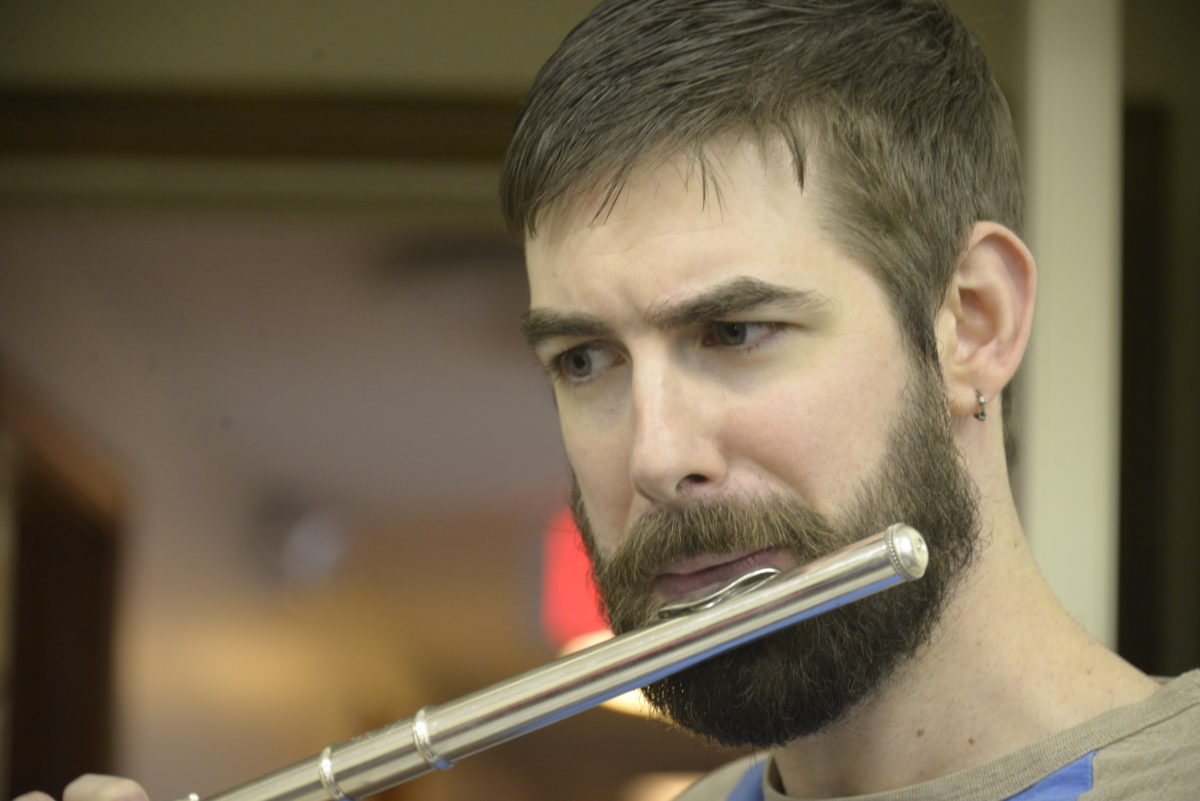
Did you know there are major differences between older and newer flutes?
Theobald Böehm invented the modern scale of both the flute and the clarinet in the late 19th century. Scale in this case refers directly to the engineering of the instrument and what pitch it will play. However, pitch hasn’t remained constant. The note A was roughly 430-435 Hz in Böehm’s time. It’s pushing 445-447 Hz in Europe and Japan now. Most flutes in the US are pitched around A-442, and tune between 440 and 444 Hz. (Hz – Hertz is a measurement of sound equaling the number of vibrations per second.)
While older instruments are not impossible to play, it may be a challenge to play in tune and will likely require a sacrifice of a lot of technique to do that. Another issue with older flutes is that the embouchure hole cuts and materials used before the 1970s have changed. The Cooper Scale, invented by Albert Cooper, gave exact positions and sizes for the flute’s current intonation. On top of that, the flute’s pitch changes depending on mouth position to play.
Early in the 20th century, flutes were preferred to have a smaller, sweeter sound in orchestras. As ensembles enlarged, so did the need for a bigger, more resonant sound. This brought the embouchure holes to be cut larger and included more precise undercutting. Risers that attach to lip plates to head joints started being made with gold or platinum to sound more vibrant. Despite the many beautifully crafted older flutes out there, if you want to play in a modern ensemble, you need a modern instrument.
Thanks, Clay Hammond, for this explanation of the flute and its construction.