★4.9 Google rated 🎵
100+ reviews from our local Gahanna families 🎵
Serving the Gahanna community since 2010 🎵
Unlimited makeups* 🎵
Change your schedule at any time 🎵
Simple, transparent pricing 🎵
Family discounts 🎵
Neurodiversity-affirming music lessons 🎵
Two-teacher model: Music Lab + instrument 🎵
Unlimited adult Music Lab time 🎵
Year-round performance opportunities 🎵
Annual benefit concert for local food pantry 🎵
Conveniently located near Hamilton & Morse 🎵
Book a 4-week trial today!
Composition and Music History lab themes will be focused on mariachi music this month. This style of music has become popular as Mexican folk music since the 18th century. While we recognize violins and trumpets, mariachi also features a high-pitched guitar called a vihuela and a bass guitar called a guitarron. Learn more this month about this genre of music!
For our youngest students we always provide cool new coloring pages and activities to involve them with music at an age-appropriate level.
Welcome to 70s music! If you’re thinking Disco, you’re right on the money. However, there were also other important styles during this decade, including funk, smooth jazz, jazz fusion, soul music, rock, and punk rock.
For our youngest students, we always have new activities like coloring pages to keep them engaged with musical studies.
For composition, try something fun and unexpected by putting your own spin on that 70s music sound. If you’ve listened to ten or more disco songs and you can’t find your groove, try something else from this amazing decade of music.
For music history, learn all about what made the 70s musical hits that inspired so many musicians past and present. You just might find a new favorite among the myriad hits from this time period.
There’s a convincing body of research that states the best time to immerse your child in music is from birth to age 9. That doesn’t necessarily mean your newborn should be learning guitar, but that parents and communities can improve a child’s musicality.
The goal of lessons at different ages becomes important. Your newborn may want to be swayed in arms and just listen to ambient music. Toddlers are ready for learning rhymes and rhythms, for interacting in groups for both singing and dancing, as well as playing beginning instruments. Given tambourines or clackers, they learn motor skills as well as musical ones.
When they approach ages for lessons, one of the best things a parent or caregiver can do is allow access to music, instruments, and often a child will be ready between ages six and nine to start private lessons. Note: Some kids are ready earlier, and we support that!
How do you know your specific kid is ready to start here? One way is to bring the kid into our school and try a sampler. A more detailed list includes showing interest in an instrument, the child can focus for a period of time appropriate for their age, they know their letters A through G and can count to 10, the child fits the instrument, you can access an instrument and a teacher (chat with us!!), and finally – that the parent or caregiver is ready to give the support to the child for practice and transportation. Ultimately, the children get so much out of their music – it’s time to start now!
As adults, we say age is just a number. When we have babies, often adults are looking at them to be sure they’re normal, or something, by checking milestones that happen at certain ages. Music lessons are not one of those checkbox milestones, but there are ways to see if your child might be inclined to start formal lessons.
Toddlers are able to identify rhythms and clap along, sing or dance. Having instruments around the house to play may be a sign that the child is interested. Does she want to play? Has he expressed interest in learning to play? Your school-age children may be learning to play in ensembles and need individual lessons. Check out our Preschool Music Class if you have a small child who loves music.
Every instrument can be noisy, so be ready for practice time. Regular practice teaches your kid discipline and perseverance. Your child needs to love the instrument, or at least have a great reason to learn it. Everyone involved should figure out how much space the instrument will take in the home, what time is available for practice and lessons as well as how far the lessons are from home.
My daughter tried drum lessons when she was 6, and she had exactly 4 when she wanted to switch to the banjo for the next 3 lessons. She wasn’t ready to stick to an instrument until she was a little older and started violin in 4th grade. My son, on the other hand, has always wanted to do drums, and took piano for two years as his entryway because the school district required it. We moved, he’s still in private lessons with MTMS for drums, and he loves it.
At MTMS, we’re ready to teach your kid about music. We start piano, drums, and violin as early as age four. We’re ready when you are. Can’t wait to be there for your musical journey.
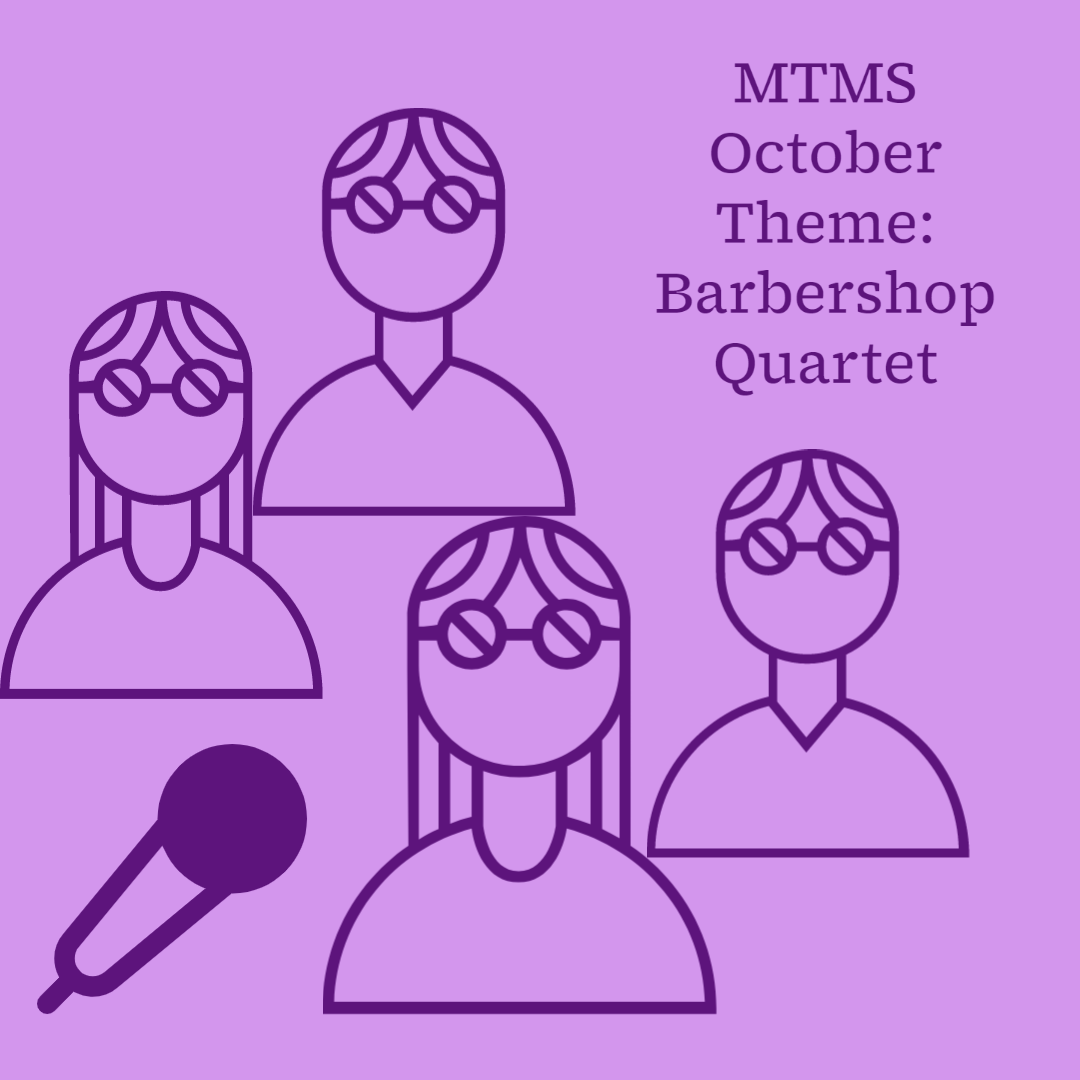
MTMS has chosen Barbershop Quartets as the theme for October. Whether you’re trying Lab Composition station or Music History, you’ll get to learn more about barbershop quartets and what they could sound like. We’ll also have offerings for our youngest students.
You may have seen barbershop quartets before. There are four parts: lead, tenor, baritone, and bass. While they sing a capella (without instruments), they may also dance or add spoken words. The organizations that promote these singing groups proclaim it is an American tradition-it is international (United States, United Kingdom, The Netherlands, Germany, Ireland, South Africa, Finland, Sweden, New Zealand, Australia, and Canada.)
2019 winner International Barber Shop Quartet Championship